
The red dishes catch your eye first: tteokbokki in a glossy chili sauce, a pot of kimchi stew, a plate of spicy chicken. You want to try Korean food, but you would rather spend lunch tasting it than reaching for water. What can you order?
Start with the way the dish is seasoned. Soy sauce brings saltiness and depth to beef and noodles, sesame oil lends a toasted aroma, and a long-simmered broth draws flavor from bones and meat. Each gives you a different place to start.
Two Ways to Season the Same Rice Cake
The familiar red tteokbokki gets its heat from chili seasoning, often made with gochujang (고추장), a fermented chili paste. Gungjung tteokbokki (궁중떡볶이) uses a soy sauce seasoning in a common preparation. The chewy rice cakes pick up the flavor of the sauce, beef, mushrooms and vegetables. Ask for it by name if you see it on the menu.

Try Soy-Marinated Bulgogi or Japchae
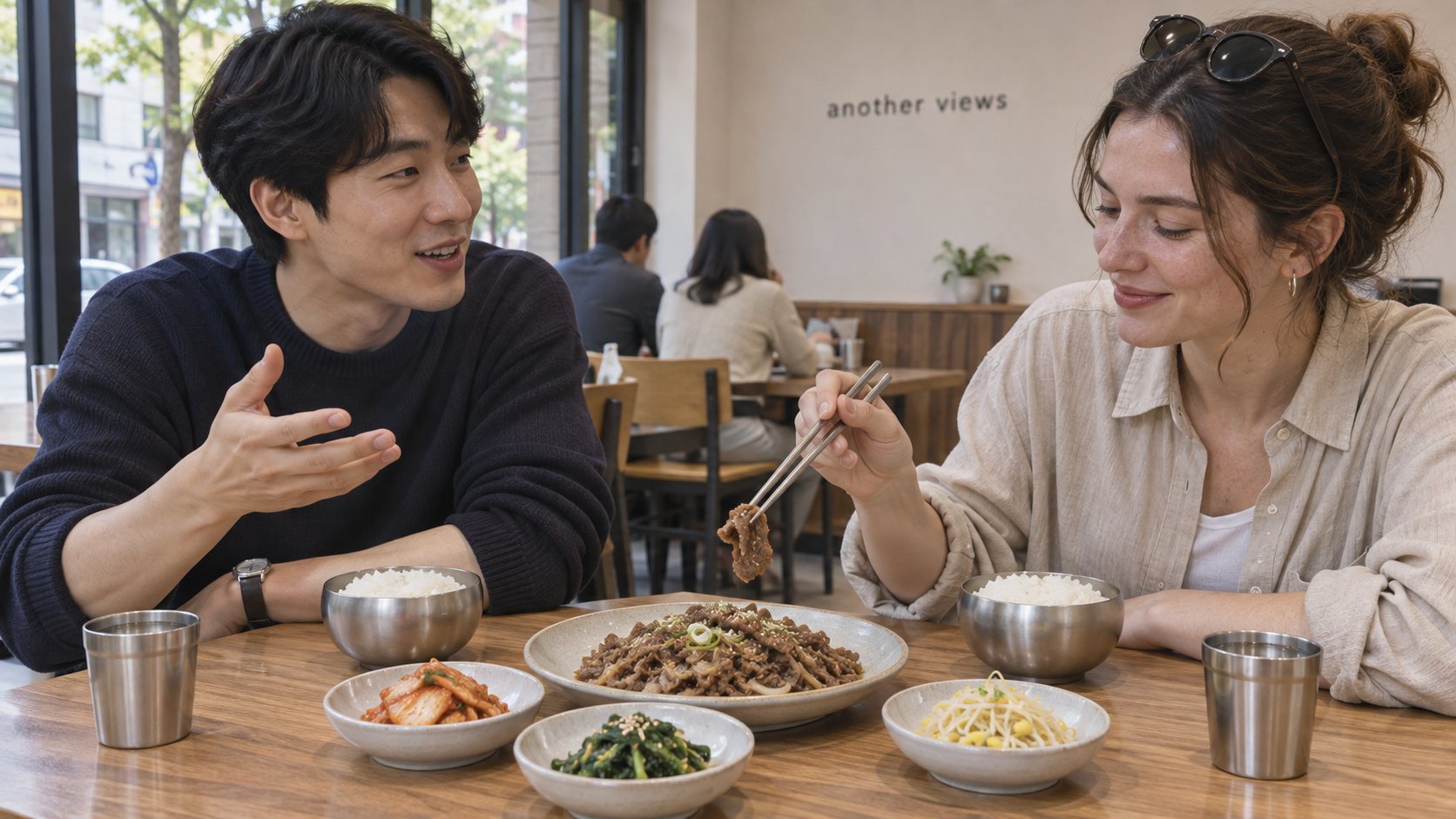
In soy-marinated beef bulgogi, thin slices of beef take on the salty sweetness of soy sauce and the aroma of garlic. Some cooks add pear to the marinade. Ask whether the bulgogi is soy-marinated, especially if the menu also lists a spicy or gochujang version.
Japchae (잡채) offers a different mix of textures. The slippery glass noodles are tossed with ingredients such as spinach, carrots and mushrooms, often with meat. Soy sauce and sesame oil give a familiar version its savory flavor and toasted aroma. If you avoid meat as well as chili, check whether the kitchen uses it.

Taste the Seolleongtang Before Adding Seasoning
Seolleongtang (설렁탕) is a soup made by simmering beef bones, often served with slices of beef. A bowl can arrive alongside rice and a dish of kkakdugi (깍두기), a cubed radish kimchi that can be spicy. Taste the broth first. At some restaurants you can season it yourself with salt or chopped scallions, and any chili seasoning served separately is yours to add or leave alone.
The soup and its sides can have different levels of heat. A red side dish beside your bowl tells you little about what is in the broth. For more on how these small dishes fit into a meal, see our guide to Korean side dishes.

White Kimchi Has a Flavor of Its Own
Baek kimchi (백김치), or white kimchi, is made without the ground chili that gives many cabbage kimchis their red color. Its flavor can come from crisp cabbage, radish, garlic and ginger, with a tang that develops as it ferments. Some recipes include a few strands of dried red chili, so ask about ingredients if you need to avoid chili altogether.

What to Ask Before You Order
“Less spicy” asks the kitchen to turn down the heat. If an ingredient was already mixed into a marinade or broth, there may be little the kitchen can change. With a sauce served separately, you can decide how much to add. If you want to avoid chili altogether, ask which dishes the kitchen already prepares without it.
| What you want to ask | Korean to show or say |
|---|---|
| Do you have any dishes that aren’t spicy? | 맵지 않은 메뉴가 있나요? |
| Does this contain fresh chili, chili powder or gochujang? | 이 음식에 고추나 고춧가루, 고추장이 들어가나요? |
| Could you serve the spicy sauce separately? | 매운 양념은 따로 주실 수 있나요? |
If you have an allergy, tell the staff which ingredient causes it. A description of the dish’s heat level does not tell the kitchen about an allergy.

At that first lunch, you might choose seolleongtang and taste the broth as it comes, or order soy-marinated bulgogi with rice. White kimchi, if it is available, offers something crisp and tangy to try alongside. There is plenty to discover at a Korean table before you reach for the chili paste.
Sources
Korean Food Promotion Institute, “Making Korean Seasoning Sauces” and “Baek Kimchi”.
Rural Development Administration, “Japchae”.
Korea Tourism Organization, “Dongu Seolleongtang”.
Maangchi, “Bulgogi”, “Ox-Bone Soup” and “White Kimchi”.


답글 남기기