
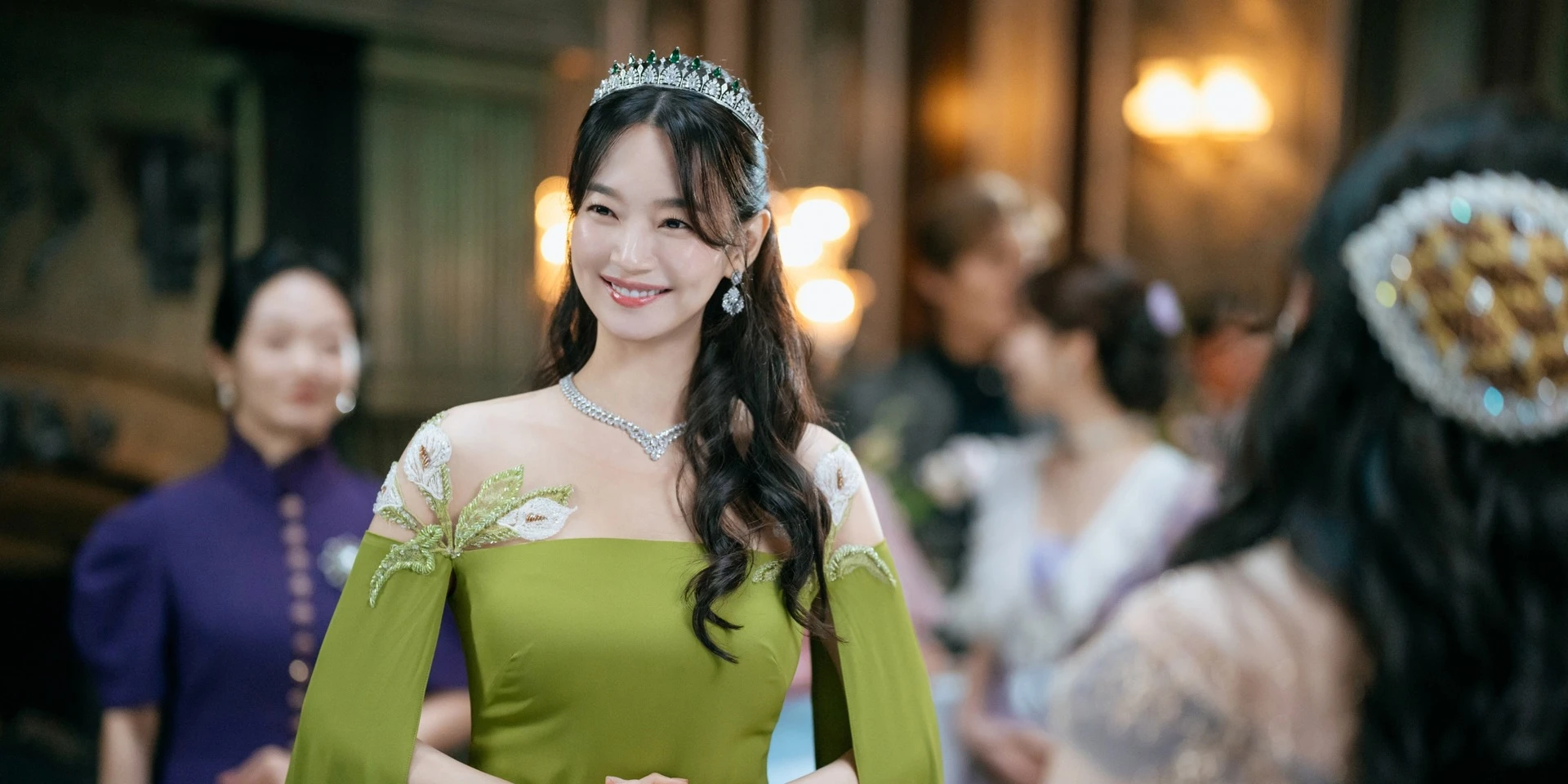
Spoiler warning: This article discusses major events through Episode 6 of The Remarried Empress.
A birthday trip appears to offer Navier and Sovieshu a chance to repair their marriage. Instead, he calls her by Rashta’s name and later leaves after hearing that Rashta is ill. News of a pregnancy makes the situation more complicated still.
Episodes 5–6, released on November 11, move the series beyond introductions and into more direct confrontations. Heinrey challenges Rashta’s deception, his relationship with Navier develops, and Sovieshu undermines his own opportunity for reconciliation.
The question is changing with the story. Can this Western-inspired fantasy world become emotionally convincing? And does the developing romance carry the same force as the marriage falling apart?

International episode reviews identify a change of pace
Writing for Forbes, contributor Laura Sirikul finds that Episodes 5–6 quicken a series whose opening installments spent considerable time establishing the situation.
Shabnam Jahan at K-waves and Beyond similarly responds positively to the combination of romance, secrets, and palace conflict. Her review highlights Navier and Heinrey’s relationship moving beyond correspondence into shared experiences.
These are individual assessments from publications with different audiences and editorial profiles, rather than evidence of a universal international verdict. Together, however, they establish a useful development: reviewers discussing these particular episodes have found more forward movement.
That makes a follow-up assessment worthwhile. The initial challenge was introducing an unfamiliar screen world. Now the series must make its characters’ decisions compelling enough to sustain attention within it.
The old marriage complicates the new romance
Faster storytelling does not automatically make the central romantic pairing more persuasive.
Sirikul sees more of Heinrey’s appeal in these episodes but remains unconvinced that Shin Min-a and Lee Jong-suk share the chemistry she finds between Shin and Ju Ji-hoon. She points to Navier and Sovieshu’s kitchen scene as an example of the latter pairing’s connection.
This is a judgment about how relationships register on screen, not a ranking of the actors’ individual abilities.

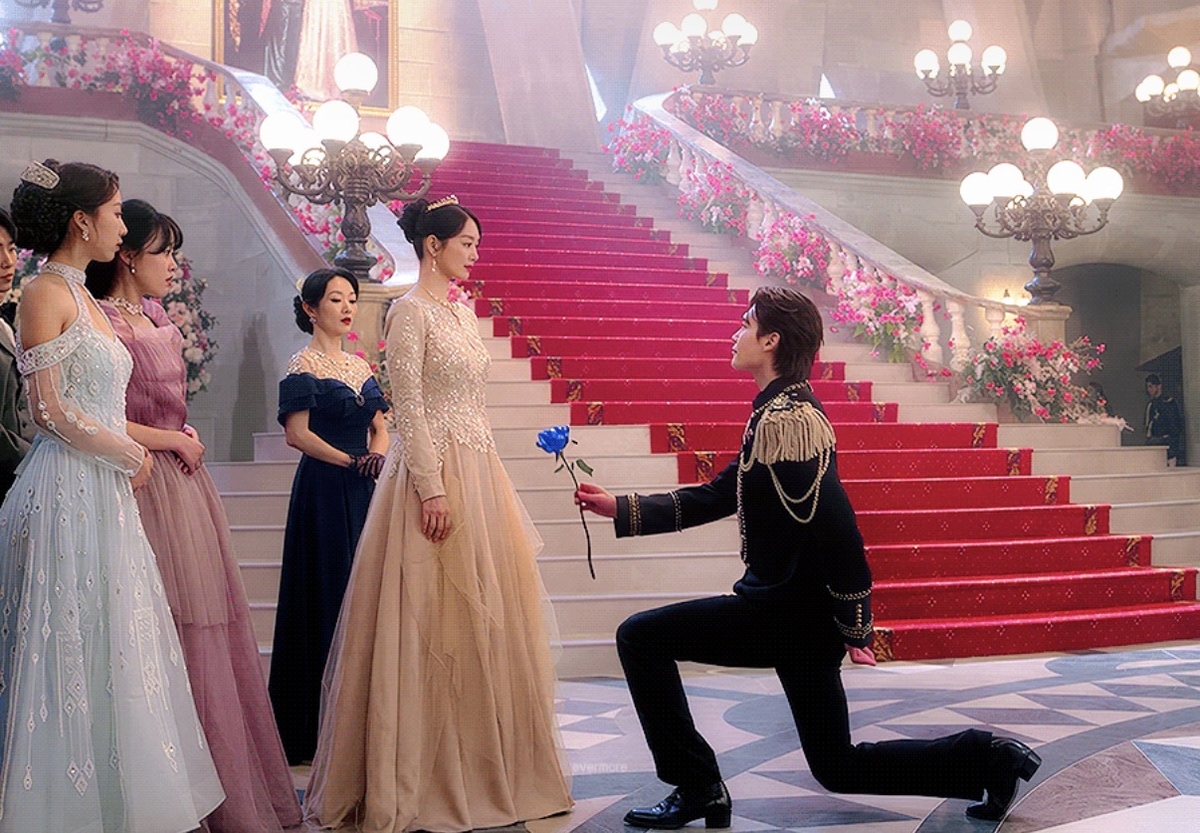
There is an interesting dramatic challenge here. If the established couple’s familiarity feels convincing, the betrayal can hurt more. But the series then needs to build an equally persuasive reason for Navier to choose someone new.
Heinrey’s kindness offers a contrast with Sovieshu’s behavior. For the romance to deepen, that contrast must become a relationship with its own shared experiences and emotional substance. Comforting someone after a betrayal and becoming the person they want to love are connected developments, but they are not identical.
Rashta needs more than another reversal
Rashta’s pregnancy raises the stakes beyond another personal humiliation. In an imperial setting, relationships also involve status and power. This article reads the development as an opportunity for the drama to connect those dimensions, without assuming what later episodes will do.
Sirikul also hopes the adaptation can give Rashta greater depth, recognizing vulnerability alongside her increasingly manipulative behavior.
That leaves another test for the series. Encouraging viewers to resent a character is different from helping them understand her decisions. Explaining the pressures behind an action does not require excusing it.
Whether Rashta remains principally an obstacle or develops into a more complex participant in the conflict will affect how much weight the palace drama can carry.

Korean criticism asks how the genre fits together
Korean coverage also offers more than a simple division between acceptance and rejection.
In a November 12 Herald Business feature, cultural critic Jung Duk-hyun discusses the combination of familiar melodramatic conflicts with a Western-inspired fantasy setting. He argues that audiences accustomed to cultural and genre mixtures may find the combination unfamiliar without necessarily finding it uncomfortable.
Here, makjang is useful context: a Korean term often associated with sensational melodrama, heightened betrayals, and extreme reversals. The interesting question is what the fantasy setting adds to those familiar emotional mechanisms.
An earlier Hankook Ilbo article, published in English by The Korea Times, identifies reservations about costumes, performance styles, and direction. Published before Episodes 5–6, it provides background on the adaptation’s initial reception rather than a response to this latest pair.
| Source | Scope | Main emphasis |
|---|---|---|
| Laura Sirikul, Forbes | Episodes 5–6 | Improved momentum, with reservations about the developing romantic chemistry |
| K-waves and Beyond | Episodes 5–6 | The developing relationship and escalating palace conflicts |
| Jung Duk-hyun, interviewed by Herald Business | Series and genre discussion after Episode 6 became available | How familiar melodrama and fantasy conventions work together |
| Hankook Ilbo / The Korea Times | Initial reception before Episodes 5–6 | Whether design, performances, and direction form a convincing screen world |
The evidence therefore does not support a neat claim that Korean audiences find the series awkward while overseas audiences love it. Different elements receive different judgments, even within broadly positive assessments.

What the performance indicators reveal
The series has attracted substantial attention, but the available figures measure different things and cover different periods.
| Indicator | Reported result | Important limitation |
|---|---|---|
| Disney announcement | Most-viewed local-original premiere on Disney+ globally, based on its first 3 days following the November 3 launch | Company-reported comparison; the release does not disclose the underlying viewing total. Predates Episodes 5–6 |
| FUNdex drama buzz | No. 1, with a 21.16% share for November 2–8, according to published reporting | Measures buzz rather than viewing or approval. Predates Episodes 5–6 |
| FlixPatrol chart | No. 2 in its worldwide Disney+ TV-show ranking, with 595 points on November 11, according to MoneyToday | Chart points are not viewer counts. The original chart could not be independently accessed for this article |
| Rotten Tomatoes | 100% Tomatometer from 7 reviews on the season page | A small sample of positive classifications, not an average score of 100/100 or an Episodes 5–6 rating |
Sources: Disney’s November 9 announcement; Ilgan Sports reporting on FUNdex; MoneyToday reporting on FlixPatrol; and the Rotten Tomatoes season page.
The timing is essential. Neither the opening 3-day viewing record nor the first-week buzz result can demonstrate an improvement caused by Episodes 5–6. Both describe attention established before those episodes arrived.
The November 11 chart position shows the series retaining a prominent place in the tracked rankings. It does not independently establish how many viewers completed the new episodes or whether audience retention improved.

Rotten Tomatoes requires similar care. Its 100% figure means the included reviews were classified as positive. The page also displays individual ratings such as 3/5 and 7/10, demonstrating that a positive classification can include substantial reservations.
These indicators support a story about visibility and early interest. They do not settle the critical questions about the romance.
What the remaining 4 episodes need to deliver
Disney’s announced schedule places Episodes 7–8 on November 18 and the final 2 episodes on November 25.
That leaves limited time for the series to connect its escalating incidents with Navier’s central decision. Showing why she should leave one relationship and why she would choose another are separate parts of that task.

The selected episode reviews reveal precisely that distinction. Events are moving faster, and the palace conflicts are generating interest. Yet the emotional connection at the center of the promised remarriage remains open to debate.
Episodes 5–6 give The Remarried Empress an opportunity to move beyond the novelty of its setting. What follows will determine whether its strongest attraction is the next reversal—or a choice that viewers understand and want Navier to make.
Sources and further reading
- Laura Sirikul, Forbes: Episodes 5–6 review — pacing, relationships, and character assessments.
- Shabnam Jahan, K-waves and Beyond: Episodes 5–6 review — episode developments and commentary.
- Herald Business: Romance fantasy and Korean melodrama — includes comments from Jung Duk-hyun; Korean-language article.
- The Korea Times / Hankook Ilbo: Initial adaptation reception — published before Episodes 5–6.
- Disney: Premiere performance and release schedule — official announcement dated November 9.
This article compares published criticism, reported episode developments, and public performance indicators. It is not a firsthand viewing review. Korean-language commentary is summarized in English by Another Views.

답글 남기기