
On a winter evening in Manchester, Emily comes home, hangs up her coat, and checks the heating. As the radiator warms, she settles onto the sofa. She tucks her feet beneath her and pulls a blanket over her knees.
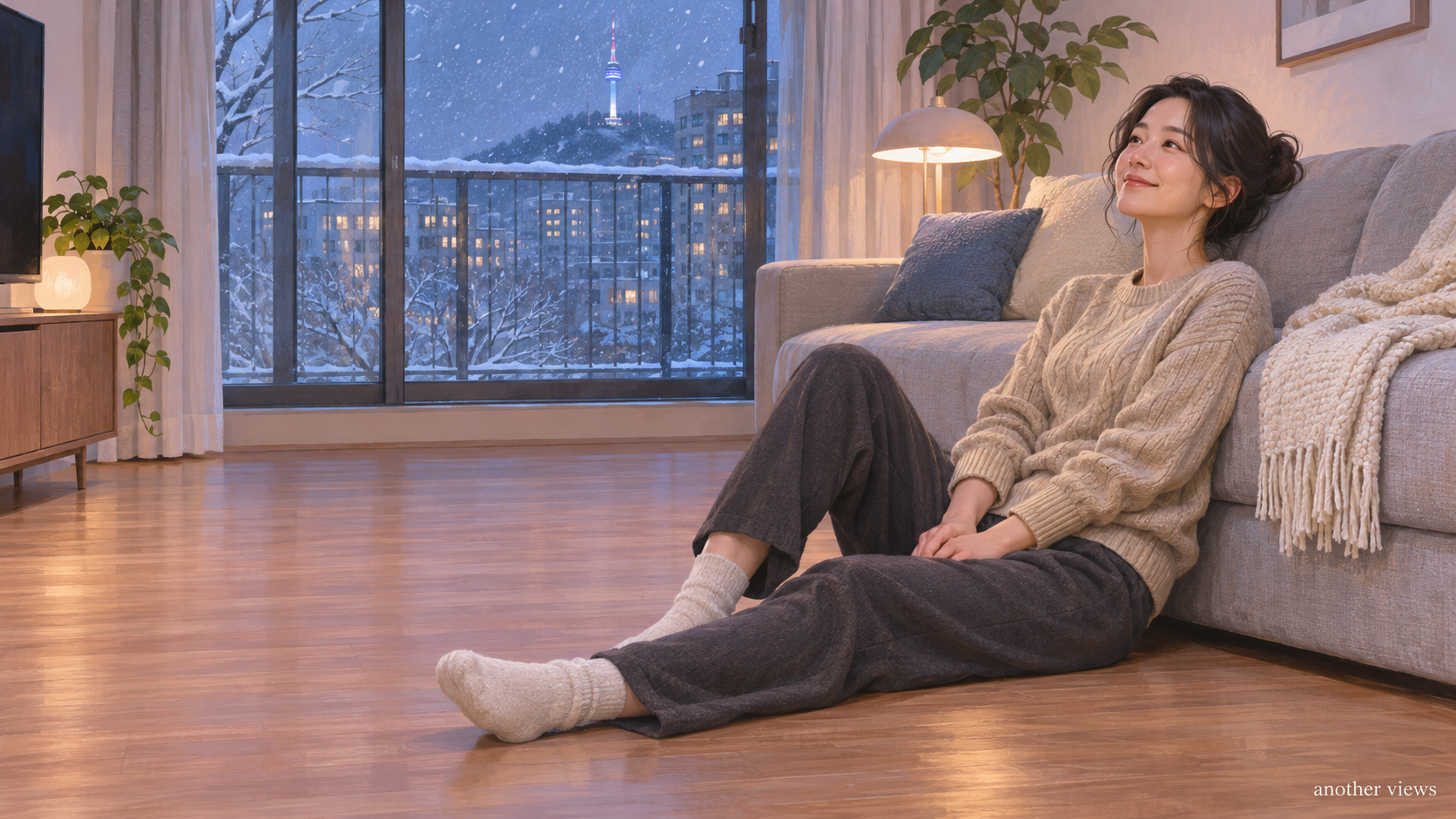
In Seoul, Jisu leaves her shoes at the entrance to her apartment. The heating has been running, and the living-room floor feels warm beneath her socks. She sits down in front of the sofa, leans against it, and stretches out her legs.
Emily and Jisu are fictional characters whose homes illustrate two different heating arrangements.
Both are looking for the same thing: somewhere comfortable to recover from the cold. Yet Emily draws her feet away from the floor, while Jisu settles closer to it.
Why does the floor feel like an inviting place to sit in a Korean home? The answer leads to ondol, a heating tradition that helped shape how rooms were built, furnished, and used.

Before the warm apartment floor
There was no single moment when someone invented the fully developed ondol room. Its history stretches across changing structures and living conditions. Korea’s Korea Heritage Service describes a tradition extending back more than 2,000 years, drawing on archaeological remains of hearths and smoke passages.
The central idea is easy to picture: send heat beneath the place where people live.
In a traditional system, a fire burned in an agungi, or firebox. Hot combustion gases traveled through passages called gorae beneath the room, warming the stone slabs and earth above them before leaving through a chimney. The floor stored heat and continued releasing it after the fire subsided.
Busan’s English-language housing guide explains this relationship between the fire, the underfloor passages, and the heat-retaining floor. For the people inside, it meant warmth could come from the surface beneath their bodies.
The cooking fire could also warm the room
One revealing place to begin understanding an old ondol house is the kitchen.
Where the kitchen firebox connected to an adjoining room, the fire used beneath a cooking pot could also send heat under the floor. Preparing food and warming the family’s living space belonged to the same arrangement.
Making it work required careful construction. The passages had to carry hot gases beneath the room, the floor had to transfer and retain heat, and smoke needed a route out through the chimney. The warmth felt above depended on the structure hidden below.
Jisu’s apartment contains different equipment, but that relationship between the floor and comfort remains familiar.
A warm floor changed what a room could do
Imagine Jisu bringing a small table into the space in front of her sofa. She can eat there, then move the table aside. The floor becomes open space again.
Traditional floor living made extensive use of that flexibility. A low table provided a place for meals. Bedding laid out at night created somewhere to sleep. Putting those objects away allowed the room to serve another purpose.

The Korea Foundation’s cultural magazine Koreana describes how ondol encouraged floor-level activities and the development of furniture suited to them. Heating, furnishings, and daily routines developed together.
Removing shoes also makes practical sense in a space where hands, clothes, and bedding touch the floor. The entrance marks a boundary between the street outside and the surface used for life indoors.
This helps explain familiar scenes in Korean dramas: people gathering around a low table, or taking bedding from storage before going to sleep. A room can change its purpose without changing its walls.
The warmest seat was a gesture of welcome
Traditional ondol floors were not equally warm everywhere. The area closer to the firebox was called the araenmok; the more distant area was the winmok.

Knowing the room meant knowing where its warmth gathered. The araenmok could be offered to an older family member or a guest. Covered rice bowls could also be placed on the warm floor to help retain their heat.
If Emily had visited such a home, an invitation to the araenmok would have meant more than “sit over there.” Her host was offering a comfortable place to recover from the cold.
A feature of the heating system had become part of hospitality—and part of the emotional vocabulary of winter.
What happened when summer arrived?
A Korean traditional house, or hanok, also had spaces suited to warmer weather. Alongside heated rooms, wooden-floored areas such as the daecheong maru connected rooms with the outdoors and provided space for summer living.
On a hanok visit, look at the transition between an enclosed room and the wooden hall beside it. The different floors reflect different seasonal needs. Residents could change where they spent time as the weather changed.
Ondol belongs within that larger arrangement: a house offering different places to live through the year.
How ondol moved into the apartment
No smoke travels beneath Jisu’s living room. Heated water circulates through pipes under the floor instead.
Modern hot-water floor heating replaced the traditional firebox-and-flue arrangement in many Korean homes. Heat may come from an individual boiler or a shared supply. Controls replaced the work of tending a fire, while the warm floor remained.
| Feature | Traditional ondol | Modern hydronic floor heating |
|---|---|---|
| Heat travels through | Underfloor flues carrying hot combustion gases | Underfloor pipes carrying heated water |
| Everyday operation | Lighting and tending a fire | Using heating controls |
| Living space | A heated floor for sitting, meals, and bedding | A warm floor used alongside beds, sofas, and dining tables |
The continuity becomes especially interesting when you look at the furniture. Beds, sofas, and dining tables changed domestic life, yet they could coexist with floor-level activities.
Jisu’s sofa provides a seat, but it can also support her back while she sits below it. The floor remains usable space around the furniture.
A heating tradition that became everyday culture
Underfloor heating exists in many countries. What makes ondol revealing is its long relationship with Korean domestic life: how floors were constructed, where people sat, which furniture they used, and how they welcomed visitors.

That relationship is reflected in the designation of ondol culture as National Intangible Cultural Heritage on April 30, 2018. The heritage encompasses shared housing customs as well as knowledge of heating.
Now imagine Emily visiting Jisu on another winter evening. She takes a seat on the sofa, then notices her friend sitting comfortably below. Curious, she reaches down and rests a hand on the floor.
It is warm.
She may still prefer the sofa. But the next time she sees a Korean family gathered on the floor in a drama, the scene will make more sense. Beneath that ordinary moment lies a long history of building warmth into the place where life happens.
More everyday Korean culture
Curious about another familiar place with a larger story behind it? Explore why travelers visit Olive Young, and the Korean beauty industry behind its shelves.
Sources
- Korea Heritage Service: ondol culture, historical background, and araenmok. Korean-language material.
- Busan Metropolitan City: housing guide covering traditional heating, bedding, and seasonal spaces.
- Koreana, Autumn 2018: “Ondol Becomes National Cultural Heritage.”
- ichLinks / ICHCAP: Ondol heritage record and designation date.



답글 남기기