
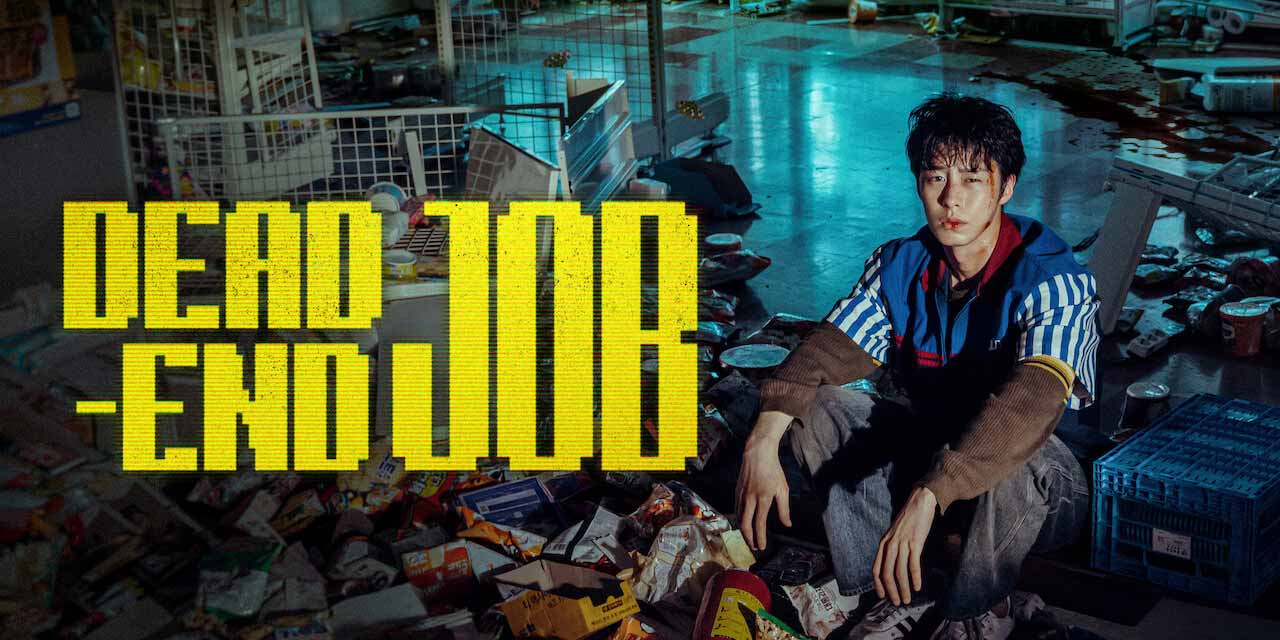
Dead-End Job reviews reveal an interest in more than the strangeness of its monsters. International critics are also paying attention to the person who must return to the workplace where those monsters await. Once you discover that a job is dangerous, the obvious answer is to quit. But when the life waiting outside that job is also difficult to endure, the decision becomes more complicated.
The promise of part-time work paying at least 50 times the minimum hourly wage immediately attracts attention. Netflix’s Korean series follows Hyeok-jun, a young man burdened by debt, as he approaches a suspicious staffing agency and finds ordinary workplaces transformed into arenas of survival. Reading reviews from Forbes alongside specialist publications in Germany and Brazil brings a particular question into focus: how free is a person’s choice when they accept a job they know could harm them?
Spoiler note: This article discusses the premise, early situations, and creative choices examined in published reviews. It does not reveal the ending or major twists.

Dead-End Job Reaches No. 2 on FlixPatrol’s Netflix TV Chart
On FlixPatrol’s page dated November 2, 2026, Dead-End Job ranks second on its worldwide Netflix TV chart with 618 points. The same page lists it as the leading TV title in countries including South Korea, Peru, Chile, and the Philippines. That follows its third-place position with 477 points on October 31.
| Chart reference | Result | What it represents |
|---|---|---|
| FlixPatrol, October 31 | No. 3 worldwide among Netflix TV shows; 477 points | A daily ranking shortly after release |
| FlixPatrol page dated November 2 | No. 2 worldwide among Netflix TV shows; 618 points | The worldwide position displayed when checked |
| Country leaders on the November 2 worldwide page | No. 1 among TV shows in South Korea | A country-level result, separate from the worldwide ranking |
These figures belong to FlixPatrol’s daily chart system and should be distinguished from Netflix’s own weekly rankings based on viewing data. The 618 points do not represent viewers or viewing hours. They indicate the series’ early chart performance, rather than establishing its quality or the satisfaction of its entire audience. Reviews offer a different kind of evidence: they explain what individual critics find meaningful, entertaining, or disappointing.
Dead-End Job Reviews: The Premise That Impressed Forbes
Forbes contributor Rick Ellis identifies the series’ central strength in a short sentence. His praise is directed at the basic idea of bringing everyday employment into contact with supernatural horror.
“The genius here is the premise.”
Ellis highlights the irony of adding actual monsters to a working life already made frightening by bills and debt. As routine assignments turn into struggles for survival, horror and black comedy develop together. He also draws attention to Lee Jae-wook’s comic expression of panic and desperation, the warmth Kim Min-ha brings, and the unsettling friendliness of Lee Hee-jun’s agency boss.

This perspective makes the protagonist’s fear and hesitation important. A person who dreads danger but urgently needs money gives the audience reasons to understand both the impulse to escape and the decision to accept another assignment. Read this way, the premise does more than provide somewhere for strange events to happen. It invites us to consider how a dangerous offer can look like a desperately needed opportunity.
German and Brazilian Critics Find Work That Is Hard to Refuse
Writing for the German review publication DER WATCHDOG, Chrischa examines how financial insecurity changes the choices available to a person. A section heading makes the interpretation especially clear.
“In „Dead-End Job“ wird Existenzangst zum Geschäftsmodell”
“In Dead-End Job, fear for one’s livelihood becomes a business model.”
The review focuses less on physical coercion than on the conditions that lead someone to accept danger themselves. As the pressure to earn a living increases, refusing undesirable work becomes more difficult. The writer also observes that this problem extends beyond South Korea. The assessment is explicitly provisional, however: it is based on the first two episodes and should not be treated as a judgment of the complete series or its ending.
Jeff Souza, writing for the Brazilian drama publication Papo de Dorama, identifies a related paradox. His review considers why Hyeok-jun keeps working even after he understands the danger.
“quanto pior fica o emprego, mais difícil é simplesmente dizer não.”
“The worse the job becomes, the harder it is simply to say no.”
The common-sense instruction to avoid dangerous work becomes less straightforward when money is urgently needed. Souza finds persuasive character motivation in that gap. In his reading, the horror includes both the monsters and the situation of someone without enough financial room to reject unacceptable conditions.

Reading these two reviews together changes the question we ask of the story. “Why would he go back there?” becomes “Can he afford not to go back?” Attention shifts from the outcome of a decision to the circumstances surrounding it. That is where the terror of an unfamiliar workplace connects with a recognizable anxiety about everyday life.
Characters and Genre Play Matter, Too
Dead-End Job reviews are not concerned only with social meaning. Karina Adelgaard of the horror publication Heaven of Horror emphasizes the appeal of its characters and the curiosity that keeps the story moving. One phrase captures an important part of her positive response.
“Interesting and likable characters (even when they’re idiots)”
Characters in horror do not have to make wise decisions at every turn to earn an audience’s interest. They can panic or misjudge a situation while remaining people whose circumstances we understand and whose next actions we want to follow. Alongside that character appeal, Adelgaard responds positively to the combination of horror, fantasy, and mystery.
This perspective helps prevent the series from being assessed solely as a vehicle for a social message. Financial pressure can explain why a character accepts a job, while changing assignments and bizarre situations supply the pleasure of discovering what comes next. Taken together, the reviews suggest two useful questions: how clearly does the series understand economic anxiety, and how engagingly does it translate that anxiety into character, fear, and humor?

Critics Differ on the Monsters and the Connecting Story
The international reviews do not agree on every element. Adelgaard accepts the computer-generated monsters as part of the series’ otherworldly setting. Ellis, by contrast, questions the effectiveness of some creature effects and argues that the succession of individual assignments sometimes weakens the larger mystery.
Souza also notes that the recurring progression from job offer to strange rules, danger, and survival becomes increasingly predictable. Set alongside one another, these observations make the storytelling challenge clear. A different assignment can offer fresh attractions in each episode. Once that pattern becomes familiar, however, the characters and the larger story still need to create a sense of forward movement.
These differences can help readers understand what they may value in the series. Someone who enjoys exaggerated monsters as playful genre creations may respond differently from someone who needs convincing visual effects to remain immersed. A viewer attracted to changing episodic scenarios may also have different expectations from one seeking a tightly accumulating mystery. Comparing reviews helps explain where those differences arise.

What Dead-End Job Reviews Reveal About Its Value
Reading Dead-End Job reviews together brings out qualities that a chart position cannot describe. Forbes identifies the premise and black comedy; the German and Brazilian writers examine the difficulty of refusing dangerous work; Heaven of Horror emphasizes the characters and genre pleasures that make the story engaging. Across these different readings stands a person accepting risk in order to keep going.
Through those perspectives, the familiar difficulty of making a living takes on an extreme fictional form. Few people have encountered monsters at work, but accepting troubling conditions because money is needed is easier to recognize. The reviews discussed here interpret that situation in different languages and critical contexts. They show points of connection across borders without establishing the response of every international viewer or proving why the series has performed well.
Understanding the series also requires reading praise and criticism together. An interest in economic insecurity does not make weaknesses in visual execution or storytelling disappear. Equally, reservations about those elements do not erase the significance of the questions being raised. Distinguishing the strength of an idea from the success of its dramatic execution allows for a more precise assessment.

The questions eventually return to working conditions and the people who live with them. Does higher pay adequately compensate for danger? Does accepting an offer necessarily mean the decision was freely made? Through the international criticism, one value of Dead-End Job becomes visible: it places those questions inside a strange world of monsters and sends them back into ordinary life. They remain worth considering after the immediate fright has passed.
Sources: Netflix’s official Dead-End Job information; FlixPatrol; Rick Ellis for Forbes; Chrischa for DER WATCHDOG; Jeff Souza for Papo de Dorama; Karina Adelgaard for Heaven of Horror.



답글 남기기